For the roughly 2,000 news and media sites Chartbeat tracks, Google Discover now delivers more traffic than Google Search does. As of late 2025, 68% of the Google traffic reaching those publishers came from Discover, versus 32% from search — 17% of all their traffic against 8% (Press Gazette, December 2025). A feed most marketers can’t fully explain has quietly become the largest single source of visitors for a large chunk of the publishing industry.
Discover breaks the assumption every keyword strategy is built on. No query. No keyword match. No ranking race in the traditional sense. Google’s systems predict what a specific person wants to read before they open a browser, then surface your article in a feed on their phone. That makes Discover optimization a different discipline from technical SEO as most people practice it — you’re not solving for intent on a query, you’re earning selection by an interest model.
- Sale!


SEO Content Audit
Original price was: 1999,00 €.1799,00 €Current price is: 1799,00 €. Select options - Sale!
Search Rankings and Traffic Losses Audit
Original price was: 3500,00 €.2999,00 €Current price is: 2999,00 €. Select options - Sale!
Full-Scale Professional SEO Audit
Original price was: 5299,00 €.4999,00 €Current price is: 4999,00 €. Select options
This guide covers how Discover decides what to show, what changed after Google’s February 2026 Discover core update, and a full checklist you can audit against today.
What Google Discover Is, and Why It Ignores Keywords
Google Discover is a personalized content feed shown on Android devices, in the Google app, and in Chrome on mobile. The user enters no search query. Google proactively suggests articles and videos based on a person’s interests, past behavior, location, and follows.
The practical consequence: Discover is not search intent architecture. You aren’t matching a keyword. You’re producing content an interest model predicts a defined audience segment will want, unprompted. Your content becomes eligible for Discover automatically once Google indexes it and it meets Discover’s content policies — no special tags, no submission, no structured data requirement.
Eligibility is not appearance. Being eligible means Google can show your content; it says nothing about whether Google will. Eligibility is the entry gate. Visibility is earned through a separate set of signals, and after February 2026 those signals changed.
The February 2026 Discover Core Update Rewrote the Rules
On February 5, 2026, Google began rolling out its first-ever core update aimed only at Discover. It finished 21 days later, on February 27 (Search Engine Land). Core updates normally move both Search and Discover together; this one touched Discover alone, and it was the first confirmed Google Search update of the year.
Google described three intended effects. The update shows users more locally relevant content from sites based in their own country, reduces sensational content and clickbait, and highlights in-depth, original, timely content from sites with demonstrated expertise in a given area (Google Search Central).
The expertise change is the one that reorders strategy. Google now assesses depth, originality, and timeliness on a topic-by-topic basis rather than assigning a single sitewide authority score. Google’s own example: a local news site with a well-developed gardening section can be treated as an expert in gardening even while covering unrelated subjects, whereas a movie review site that publishes one gardening article would not. Topical consistency earns Discover visibility. Sporadic coverage of whatever is trending no longer does.
The data shows this narrowing. NewzDash tracking found that unique publishers in the top 100 US Discover placements dropped from 172 to 158 domains in the first post-update measurement window, while the range of content categories represented widened (reported by Search Engine Journal via NewzDash). Fewer sites, holding deeper positions in the topics they actually own. Templated curiosity-gap publishers lost ground fastest — Yahoo went from multiple top-100 items pre-update to zero immediately after, before partially recovering.
One more finding matters for anyone chasing Discover as a revenue channel. When Google’s December 2025 core update hurt many publishers in core search, Discover traffic to breaking-news stories rose 168% year over year for the US publishers Define Media Group analyzed; the February Discover update trimmed that slightly but left breaking-news Discover traffic at more than double its pre-December level (Press Gazette, March 2026). Discover is volatile, and it moves on its own schedule, independent of search.
How Discover Decides What to Show
Discover ranks on a distinct model from organic search. Four signal categories carry the weight.
Interest and behavior. Discover is driven by what people read, watch, search for, and where they go. Google builds each feed from that behavioral history, then matches content to established interest patterns. Your article needs to fit a pattern Google already recognizes in a user segment — not a keyword.
Freshness. Discover favors recent content heavily. Most of an article’s Discover traffic arrives in the first 48 to 72 hours after publication, then falls off sharply. Covering a development the day it happens outperforms covering it a week later by a wide margin, because the interest signal is strongest while the topic is live. Evergreen content can appear too, but only with real, substantive updates — new research, new examples, new sections. A changed date alone does not signal freshness.
Topical authority over time. Consistent publishing inside a defined topic builds Discover visibility that compounds. After February 2026, occasional posts on trending subjects outside your established topics no longer earn sustained traffic. This is the single biggest strategic shift the update introduced.
Visual presentation. The image is the first thing a user sees in a Discover card, before the headline. Google states plainly that large, high-quality images “are more likely to generate visits from Discover” (Get on Discover, Google Search Central). You’ll see specific CTR uplift percentages quoted around the web — they range widely and trace back to individual vendor estimates rather than Google or controlled studies, so treat any exact number with suspicion. The direction is not in doubt; the precise multiplier is.
E-E-A-T: The Gate Before Everything Else
Google’s helpful content systems apply to Discover the same way they apply to organic search, with one sharper edge. For YMYL topics in health, finance, and legal, demonstrable expertise — named authors with credentials, cited sources, editorial review — is now effectively a condition of appearing in Discover at all, not a nice-to-have.
Across all content, E-E-A-T covers four dimensions, and each has a concrete Discover expression.
Experience means the author had direct, real-world involvement with the topic. Original photography, first-person accounts, and personal case studies signal it. Generic synthesis of other people’s articles does not, and after February 2026 that synthesis is exactly what gets deprioritized.
Expertise requires credentialed or demonstrably skilled authors producing in-depth analysis with cited research — not surface coverage. Google evaluates this per topic now, so expertise concentrated in a defined subject beats shallow breadth across many.
Authoritativeness accrues over time through reputation: mentions and links from respected sources in your field, author pages documenting credentials, and consistent output that earns external recognition. This is where a real off-page SEO program feeds Discover eligibility rather than just search rankings.
Trustworthiness is the most technical of the four. HTTPS, accurate contact details, a transparent About page, a visible ethics policy, clear disclosure of sponsored content, prompt correction of errors. For news, every article needs a visible byline, date, and publisher information.
Content Strategy for Discover
Headlines Carry the Click
The headline, paired with the image, decides whether a card gets tapped. Effective Discover headlines create genuine interest — they tell a reader something specific and worth knowing sits behind the tap — and the article then has to deliver on that promise. The February update explicitly demotes headlines that manipulate through exaggeration, morbid curiosity, or withheld information (Google’s updated Discover documentation). The line Google drew is precise: it is not anti-engaging headlines. It is anti-misleading ones.
The pattern that works is specific plus relevant plus a real reason to care. “SEO Tips 2026” says nothing. “Why Your 2026 SEO Strategy Fails Without Discover” makes a claim a reader can agree or disagree with. Pack the core message into roughly the first 60 characters, since Discover truncates around there — though longer titles aren’t automatically penalized.
Audit your Open Graph tags alongside your title tags. Discover behaves more like a social feed than a results page, and Google sometimes uses og:title and og:image to build the card instead of your page title. If those tags are broken or generic, you can be indexed and still never surface.
Timely Versus Evergreen
Discover rewards two models, and the strongest programs run both.
Timely content captures a spike of interest and holds Discover visibility for roughly one to three days. Cover developments in your niche the day they break. A day’s delay costs most of the window.
Evergreen content stays eligible only with regular substantive updates. Add new data, refresh examples, expand a section — give Google a reason to resurface the piece to users whose interest signals match the topic now.
Personal, editorial content — first-hand stories, opinion grounded in real expertise, niche insight — consistently outperforms generic informational articles in Discover. This channel rewards conviction and a point of view over encyclopedic coverage.
Depth and Originality
Shallow content does not surface, and the February update sharpened that. Discover rewards thorough explanation, a genuine angle, real examples, and insight that isn’t one quick search away. Storytelling, case studies, and concrete anecdotes lift the post-click engagement signals Discover’s model tracks — and post-click behavior feeds back into whether Google keeps distributing the piece.
Image and Video Requirements
Image compliance is a hard gate. Fail it and you’re demoted to a thumbnail nobody taps, regardless of content quality.
Showing 4–5 of 5 resultsSorted by popularity
Images must be at least 1200 pixels wide, with more than 300,000 total pixels (Get on Discover, Google Search Central). Implement max-image-preview:large in the page head — without it, Google is technically restricted from showing the large preview. Don’t use your site logo as the primary article image. Avoid overlaid text, borders, or logos on the thumbnail. Staged, heavily filtered, or poorly lit images reduce engagement and, in practice, reduce eligibility.
Use a 16:9 landscape ratio for the featured image; it fills the full width of the mobile card. 4:3 is acceptable but often gets relegated to a smaller side thumbnail. Choose the image on visual impact, since it’s the first thing a user sees.
For video, embed on indexed pages with standard <video> or <iframe> tags, provide a high-quality thumbnail at a stable URL, and confirm Googlebot can reach the video files (not blocked in robots.txt). Design for the first few seconds and for autoplay without sound.
Technical Requirements for Discover
Mobile Performance
Discover is mobile-only — desktop expansion is being tested, not broadly live — so mobile performance directly gates eligibility. Pages must be crawlable, indexable, mobile-friendly, and policy-compliant, or they won’t surface. Text has to be readable without zooming, tap targets spaced for fingers, and intrusive interstitials kept off the reading experience.
Core Web Vitals
Three metrics decide the page-experience signal, and the large hero image Discover requires is usually the thing you’re fighting.
Largest Contentful Paint (LCP) should be 2.5 seconds or less — that 1200px hero is typically the LCP element, so optimize TTFB, use a CDN, compress the image, and defer non-critical JavaScript and CSS. Interaction to Next Paint (INP) should be 200 milliseconds or less; break up long JavaScript tasks. Cumulative Layout Shift (CLS) should be 0.1 or less; set explicit dimensions on all media and reserve space for anything that loads late. Monitor all three in Google Search Console’s Core Web Vitals report. If Discover performance is the goal, a proper Core Web Vitals audit is the fastest place to find what’s dragging eligibility down.
Structured Data
Implement Article, NewsArticle, or BlogPosting schema. Author schema needs author.name (full name only, no titles or publisher names) and, critically, author.url pointing to a unique author profile page. Include datePublished and dateModified in ISO 8601 format. Publisher schema should carry publisher.name and publisher.logo as an ImageObject. Make sure the primary image defined in schema is the 1200px-plus version.
RSS for the Follow Feature
Discover’s Follow feature lets users subscribe to your feed and raises the odds they see your content. Enable it with a <link> in the head pointing to a current RSS or Atom feed, confirm robots.txt isn’t blocking it, and check that the feed <title> and per-item <link> elements are present and accurate.
Measuring Discover Performance
Google Search Console’s Performance report for Discover shows impressions, clicks, and CTR for content that appeared in Discover over the last 16 months, once data clears a minimum impression threshold. The report now includes Chrome traffic and covers Discover across all surfaces (Get on Discover, Google Search Central). It’s your primary measurement tool, because Discover traffic often isn’t cleanly separated in Google Analytics.
Use it to find your top-performing URLs, formats, and headline patterns, then repeat what works: publish follow-ups on successful topics and internally link to your Discover-performing pieces. If clicks are strong but Discover impressions are flat, the problem is usually upstream — an indexing or eligibility issue an SEO content audit surfaces quickly.
Be honest about volatility. Google says explicitly that ongoing work on Discover’s experience means sites may see traffic changes unrelated to their own content quality or cadence. Discover is a supplementary channel, not a baseline you can forecast against. Treat it as compounding organic equity: it builds over time through consistent topical publishing, while individual articles spike and decay.
Google Discover SEO Checklist
Audit your current setup against every layer below.
E-E-A-T and Credibility
- [ ] Content authored by people with direct, real-world experience of the topic
- [ ] Original photos and video from first-hand experience included
- [ ] Author pages with full credentials, qualifications, and linked external work
- [ ] Facts and data sourced to authoritative references
- [ ] HTTPS, clear contact information, and a transparent About page
- [ ] Ethics and privacy policies publicly accessible
- [ ] Sponsored content explicitly disclosed
- [ ] Factual errors corrected promptly with visible notices
- [ ] News articles display date, byline, and publisher on every page
Content Strategy
- [ ] Timely content published within hours of a development, not days
- [ ] Evergreen content updated with substantive new information on a schedule
- [ ] Headlines specific and interest-driven, not generic
- [ ] Headlines accurately reflect the article — no exaggeration or withheld information
- [ ] Core message in the first ~60 characters of each headline
- [ ]
og:titleandog:imageaudited for the social-feed card context - [ ] Content offers a perspective or information not easily found elsewhere
- [ ] Real examples, case studies, or original anecdotes present
- [ ] Publishing consistent within defined topic clusters, not scattered
Images
- [ ] Primary image at least 1200px wide and over 300,000 total pixels
- [ ]
max-image-preview:largepresent in the head - [ ] Site logo not used as the primary article image
- [ ] Images sharp, well-lit, unfiltered
- [ ] No text, borders, or logos on the thumbnail
- [ ] 16:9 aspect ratio for the featured image
- [ ] Thumbnail chosen for visual impact
Technical
- [ ] All target pages crawlable and indexable — no stray noindex or robots.txt blocks
- [ ] Passes mobile-friendliness
- [ ] LCP ≤ 2.5s, INP ≤ 200ms, CLS ≤ 0.1
- [ ] Article, NewsArticle, or BlogPosting schema implemented correctly
- [ ] Author schema includes
author.urlto a unique profile - [ ]
datePublishedanddateModifiedin ISO 8601 - [ ] Primary image in schema is the 1200px+ version
- [ ] RSS or Atom feed linked in the head and not blocked
- [ ] No manual actions in GSC Security and Manual Actions
Monitoring
- [ ] GSC Discover performance report reviewed regularly
- [ ] Top URLs and headline patterns documented
- [ ] Internal links added to Discover-performing articles
- [ ] Headlines tested and refined against GSC CTR data
- [ ] Discover treated as a supplementary channel, not the primary dependency
Frequently Asked Questions
Q: Does Google Discover require any special submission or setup? No. Eligibility is automatic once your content is indexed and complies with Google’s content policies — there’s no submission process. Eligibility and appearance are separate, though: Google’s systems still have to judge that your article matches a user’s interest profile and clears its quality signals before it surfaces.
Q: Why isn’t my content appearing in Discover even though it’s indexed? Indexing is necessary but not sufficient. The usual culprits are images under 1200px, a missing max-image-preview:large tag, thin or unoriginal content, weak E-E-A-T signals, and poor Core Web Vitals. After February 2026, publishing inconsistently within your niche is also a disadvantage — topical authority is now a named, per-topic signal.
Q: How long does Discover traffic last for a single article? Most of it arrives in the first 48 to 72 hours, then declines sharply. Evergreen pieces can resurface when a topic trends again, but only if they’ve been substantively updated. Build your traffic model around consistent publishing volume in a defined topic cluster, not sustained Discover life for any one article.
Q: Can small or newer sites appear in Discover? Yes, and topical focus is the lever. Google assesses expertise from the body of content a site produces on a topic, not purely from traditional backlink-based domain authority. A newer site publishing consistently in a tight niche can build Discover eligibility faster than a large site covering topics sporadically. Establish your focus early.
Q: My Discover traffic dropped around February 2026 — what should I check first? Content quality and topical consistency before technical SEO. The update demoted clickbait, sensational headlines, and engagement-bait, and rewarded genuine per-topic expertise. Audit whether your headlines withhold or exaggerate, and whether your publishing is concentrated in topics you can credibly own. Google re-evaluates Discover eligibility on a rolling basis as you publish.
Turn Discover Visibility Into Revenue
Discover rewards the same fundamentals that make content worth reading — depth, originality, trust, and strong visuals — but distributes it based on who the reader is, not what they searched. That’s why the work compounds: every topically consistent, high-quality article sharpens Google’s read of your site’s expertise, which raises the odds your next piece surfaces to the right feed.
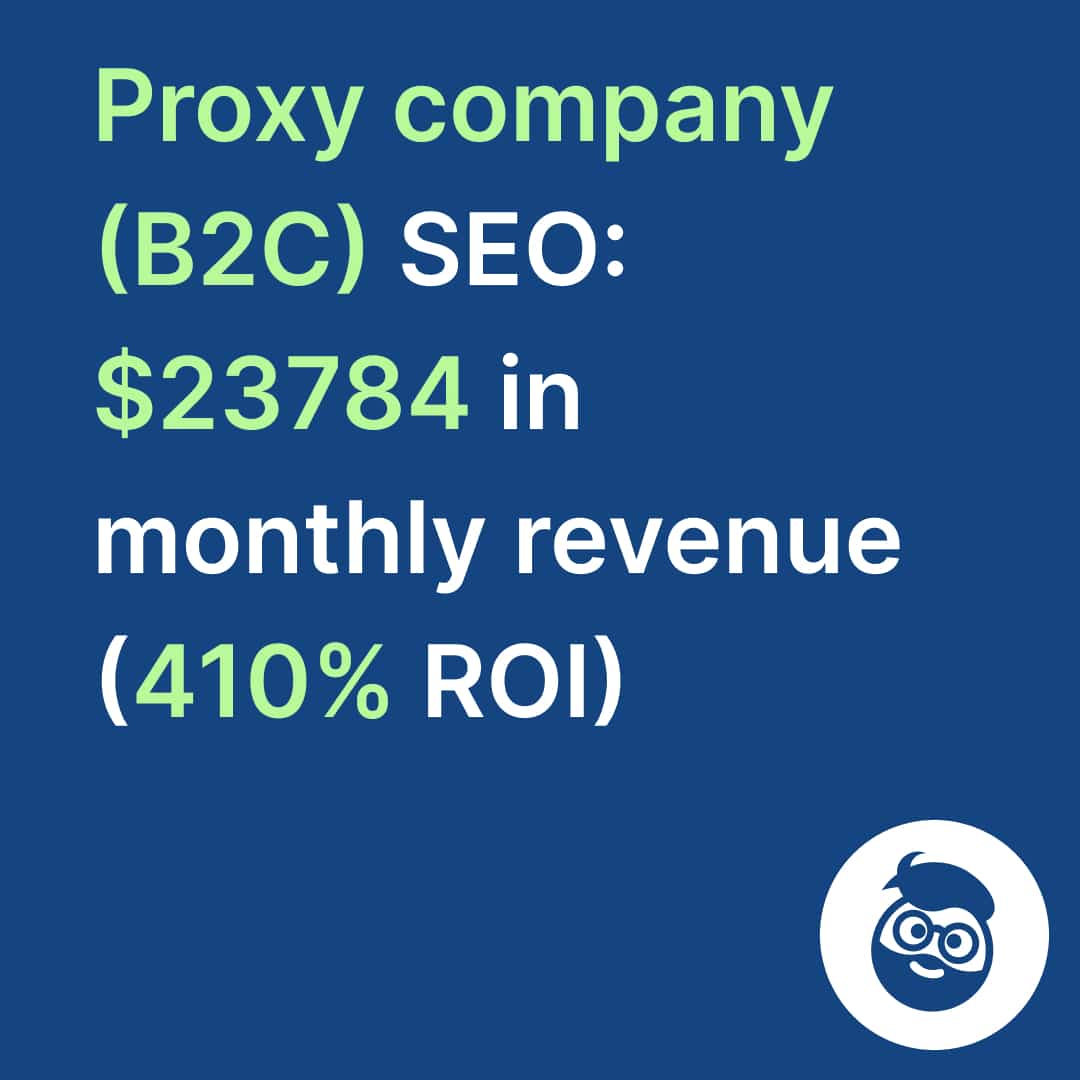
The trap is treating Discover impressions as the scoreboard. Impressions and clicks are inputs. The number that matters is whether that traffic converts into leads, enquiries, and sales — and for interest-based feed traffic that arrives with no purchase intent, that conversion path has to be built deliberately. We’ve done exactly that kind of revenue-first work across niches, from a proxy-selling company we grew to $23,784 in monthly revenue at 410% ROI to downloadable software SEO that lifted sales 700%.
- Sale!
SEO Content Audit
Original price was: 1999,00 €.1799,00 €Current price is: 1799,00 €. Select options - Sale!
Search Rankings and Traffic Losses Audit
Original price was: 3500,00 €.2999,00 €Current price is: 2999,00 €. Select options - Sale!
Full-Scale Professional SEO Audit
Original price was: 5299,00 €.4999,00 €Current price is: 4999,00 €. Select options
Start with the checklist above — audit image compliance first, since it’s the fastest technical fix with direct CTR impact, then work through E-E-A-T and topical consistency. If you’d rather have Discover eligibility diagnosed as part of a broader revenue campaign, book a call or look at our full-scale SEO audit. SEO is a joint effort — bring your content and dev teams, and we’ll build the channel around measurable business outcomes, not vanity impressions.