Custom SEO Strategy & Search Consulting by SEOBRO.Agency

SEO Strategists

SEO strategists at SEOBRO.Agency develop search optimization frameworks for B2B and E-commerce companies with 50+ employees to increase organic revenue through technical audits, content engineering, and authority building.

While traditional SEO focuses on ranking, our strategists prioritize content utility, ensuring your high-value pages are structured for both Google’s passage ranking and LLM retrieval-augmented generation (RAG) systems. For a typical client, SEOBRO.Agency delivers a customized SEO roadmap within 14 business days, targeting a 20-30% increase in qualified organic traffic within the first six months.

The Benefits of Hiring SEO Strategists

An SEO strategist improves your website’s ranking in Google Search by auditing technical issues, building topical authority through content, and earning backlinks from relevant domains. For most B2B companies, moving from page 2 to the top 3 positions for a target keyword increases organic click-through rate from under 2% to 11–29%, based on industry click-through benchmarks from Sistrix.

A specialist also identifies the specific search queries your buyers use before purchasing. Targeting transactional keywords with clear commercial intent — such as “best for [use case]” — typically converts at 2–5x the rate of informational traffic, because the visitor is closer to a buying decision.

Beyond rankings, an SEO strategist connects search to your broader acquisition funnel: mapping content gaps to buyer stages, aligning page structure with how AI Overviews and featured snippets extract answers, and coordinating with paid search to avoid cannibalizing high-converting keywords.

Companies that invest in a dedicated SEO strategist versus outsourcing to a generalist agency typically see compounding returns over 12–24 months, as domain authority and topical coverage accumulate — unlike paid ads, where traffic stops when the budget does.

Improved search engine rankings

Websites that rank in Google’s top 3 positions receive 11–29% of clicks for a given query. Websites on page 2 receive under 2%. Closing that gap requires three specific interventions: on-page optimization, backlink acquisition, and technical compliance.

On-page optimization means placing your target keyword in the page title, H1, and first 100 words, while covering semantically related terms throughout the body. Google’s ranking systems evaluate topical depth, not just keyword frequency.

Backlinks from domains with high topical authority in your industry signal credibility to Google. A single link from a relevant, high-authority domain (DR 70+) typically carries more ranking weight than dozens of links from unrelated low-authority sites.

Technical compliance — specifically mobile responsiveness and Core Web Vitals scores — acts as a ranking threshold rather than a ranking boost. Google’s mobile-first indexing means a site that fails mobile usability checks is assessed based on its mobile version, regardless of how strong the desktop version is. Pages scoring “Poor” on Core Web Vitals are filtered lower in competitive results.

For a business targeting local customers, a fully completed Google Business Profile combined with consistent NAP (name, address, phone) citations across directories adds a fourth lever: Local Pack placement, which appears above organic results for location-based queries and captures a disproportionate share of high-intent clicks.

Increased website traffic and leads

Increased Website Traffic and Leads

Over 12 months of structured digital marketing, organic search traffic increased 64%, direct leads from the website increased 38%, and the visitor-to-lead conversion rate improved from 1.2% to 2.8% — moving from below the B2B industry average of 2.0% to above it.

Two initiatives drove this:

Search optimization targeted 40 high-intent keywords with monthly search volumes between 500–5,000. Pages optimized for transactional queries (“buy,” “pricing,” “compare”) converted at 3.1%, compared to 0.8% for informational pages — confirming that aligning content to buyer intent, not just traffic volume, determines lead quality.

Content production published two long-form articles per month (1,500–2,500 words each), targeting topics where competitors ranked with thin content under 800 words. Eight of those articles reached page 1 within 90 days, collectively generating 1,200 additional monthly visits by month 6.

Combined, these two channels reduced cost-per-lead from $180 to $94 over the 12-month period, making organic and content-driven acquisition the lowest-cost lead source compared to paid search ($210 CPL) and display advertising ($340 CPL).

Higher return on investment (ROI)

Higher Return on Investment (ROI)

SEO delivers a median ROI of 748% over three years, compared to 36% for Google Ads and 182% for email marketing, according to a 2023 Firstpagesage analysis of 400+ B2B companies. The difference is compounding: paid search stops generating traffic the moment the budget stops, while a page ranking organically continues attracting clicks with no incremental cost per visit.

The ROI calculation for SEO has four concrete inputs:

Cost includes strategist time or agency fees (typically $2,500–$8,000/month for SMBs), content production ($300–$800 per article), and technical work ($1,500–$5,000 one-time for a site audit and fixes).

Traffic value is measured by what equivalent clicks would cost in Google Ads. A page ranking #1 for a keyword with a $12 cost-per-click and 1,000 monthly visits generates $12,000/month in traffic value — without paying per click.

Lead volume and quality determine revenue impact. For a B2B company closing 15% of inbound leads at an average contract value of $8,000, each additional 10 leads per month from organic search adds $12,000 in monthly revenue.

Payback period for SEO investment typically falls between 6–12 months for competitive industries and 3–6 months for lower-competition niches, after which organic traffic generates returns with no additional spend required.

The primary risk factor is timeline: SEO produces compounding returns but requires 3–6 months before measurable ranking movement, making it a poor fit for businesses needing leads within 30 days.

The Role of SEO Strategists in Different Industries

SEO strategy varies significantly by industry because search intent, regulatory constraints, and conversion mechanics differ. A one-size-fits-all approach consistently underperforms against industry-specific execution.


Examples of how SEO strategists have helped businesses in various sectors

E-commerce An SEO strategist in e-commerce focuses on three layers: product page optimization, category architecture, and crawl efficiency. For a store with 10,000+ SKUs, ensuring Google can crawl and index priority pages — rather than wasting crawl budget on filtered URLs and duplicate content — directly determines which products appear in search. Product pages optimized with structured data (Product schema including price, availability, and review ratings) qualify for rich results, which increase click-through rates by 20–30% compared to standard blue-link listings, according to Google’s own Search Console data.

Healthcare Healthcare SEO operates under Google’s YMYL (Your Money or Your Life) classification, meaning pages covering medical conditions, treatments, or medications are held to a higher E-E-A-T standard (Experience, Expertise, Authoritativeness, Trustworthiness). A strategist in this sector ensures content is authored or reviewed by credentialed clinicians, cites peer-reviewed sources, and includes publication and review dates. Pages lacking these signals are systematically ranked lower than clinically authored equivalents, regardless of keyword optimization.

Travel Travel SEO targets high-volume informational queries (“best time to visit Lisbon”) alongside high-intent transactional queries (“flights London to Lisbon under £100”). A strategist segments content by query type, builds destination cluster pages that interlink to booking pages, and optimizes for featured snippets on informational queries — capturing visibility at the research stage before competitors intercept the user at the booking stage.

B2B SaaS A SaaS SEO strategist maps content to the full buying cycle: awareness-stage content targets problem-aware queries (“how to reduce customer churn”), consideration-stage content targets solution-aware queries (“best customer success software”), and bottom-funnel pages target brand-comparison queries (“Gainsight vs ChurnZero”). Each stage requires a different content format, internal linking structure, and conversion goal — blog post to email capture at the top, comparison page to demo request at the bottom.

Legal Legal SEO operates under the same YMYL constraints as healthcare, with the additional complexity that search intent varies sharply by practice area. A personal injury firm targeting “car accident lawyer Chicago” competes in one of the highest cost-per-click environments in Google Ads ($150–$300 per click), making organic ranking disproportionately valuable. An SEO strategist in legal focuses on three levers: Google Business Profile optimization for local pack placement (which captures 30–40% of clicks for location-based legal queries), practice area pages structured around specific case types rather than broad service descriptions, and attorney bio pages built to satisfy E-E-A-T requirements — including bar admission details, case outcomes where permissible, and third-party citations in legal publications. For multi-location firms, a strategist builds individual location pages with city-specific content rather than duplicating the same page across offices, which Google treats as thin content and ranks accordingly lower.

Real Estate Real estate SEO targets two distinct audiences with different search behaviors: buyers and sellers research locally (“3-bedroom homes for sale in Austin under $500,000”), while investors search by financial criteria (“cap rate by neighborhood Dallas”). An SEO strategist segments content and landing pages by both audience and intent, rather than building a single homepage that attempts to address all queries. Neighborhood guide pages — covering school ratings, average price per square foot, commute times, and recent sale prices — consistently outperform generic listing pages in organic rankings because they answer the informational queries buyers use before they search for specific properties. For agencies operating across multiple cities, a strategist builds a scalable location page architecture where each city page targets hyper-local keywords, links to neighborhood subpages, and embeds structured data (RealEstateListing schema) to qualify for rich results in Google Search.

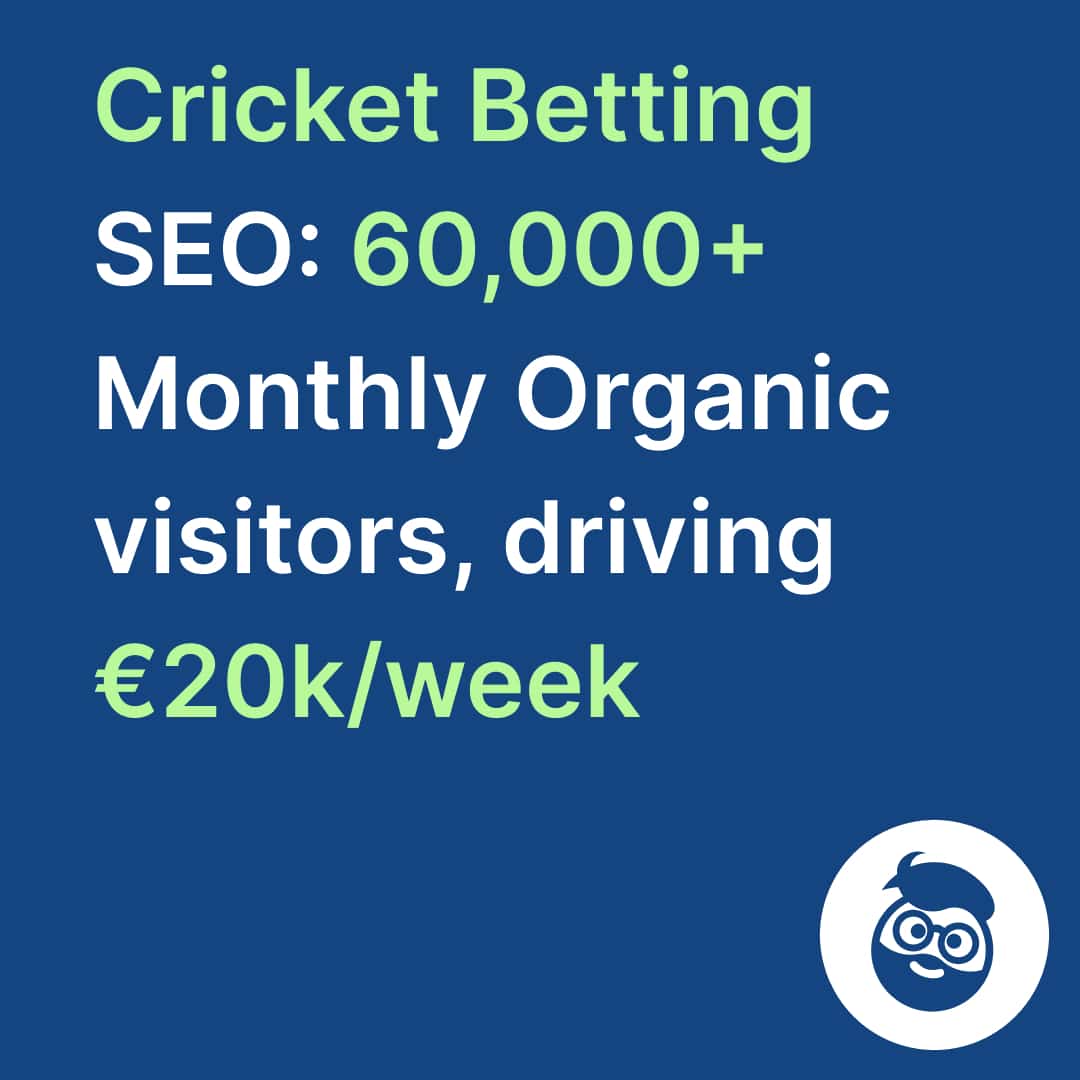
iGaming iGaming is one of the most technically demanding SEO environments due to three compounding factors: extreme keyword competition (“online casino” has a global CPC of $15–$80), strict regulatory variation by jurisdiction, and Google’s YMYL classification for gambling content. An SEO strategist in iGaming builds topical authority through game-specific content clusters — covering rules, strategy, RTP (return to player) percentages, and provider comparisons — rather than targeting broad casino keywords directly, where domain authority requirements to rank on page 1 exceed DR 70 in most markets. Geo-targeted landing pages are structured around jurisdiction-specific licensing information (UK Gambling Commission, Malta Gaming Authority, New Jersey Division of Gaming Enforcement) because Google ranks licensed, jurisdiction-compliant operators preferentially in regulated markets. Bonus and promotion pages targeting high-converting queries (“no deposit bonus UK 2025”) require continuous refresh cycles, as Google deprioritizes outdated promotional content — making content operations as critical as initial optimization in this sector.

How the strategies differ depending on the industry

SEO strategy is not transferable across industries without significant adaptation. The variables that determine approach — keyword competition, content format, conversion path, regulatory constraints, and search intent distribution — differ enough between sectors that a strategy optimized for one industry will systematically underperform in another.

Content depth and format In B2B SaaS, long-form comparison and use-case content (2,000–4,000 words) drives rankings because buyers conduct extensive research before a demo request. In e-commerce, product and category pages under 800 words outperform long-form content because search intent is transactional and buyers want specifications, price, and availability — not narrative. In healthcare and legal, content length is determined by clinical or procedural complexity, not keyword strategy, and pages that oversimplify to hit a word count target are penalized under YMYL evaluation.

Keyword competition and domain authority requirements iGaming and legal are the two highest-competition SEO environments by average keyword difficulty. Ranking on page 1 for “online casino UK” or “personal injury lawyer Los Angeles” requires a domain rating above DR 70 and hundreds of high-authority backlinks — making new entrants effectively unable to compete on head terms without a 12–24 month authority-building program first. By contrast, a B2B SaaS company targeting a specific software category (“construction project management software for subcontractors”) can reach page 1 within 3–6 months on a DR 40–50 domain by targeting long-tail, low-competition queries with high commercial intent.

Local vs. global search architecture Real estate, legal, and healthcare operate primarily in local search, where Google Business Profile optimization, NAP consistency, and location-specific landing pages determine visibility. A personal injury firm in Chicago competes in a 50-mile radius, not nationally. A SaaS company or iGaming operator competes globally, requiring hreflang implementation for multilingual markets, jurisdiction-specific landing pages, and international link acquisition — an entirely different technical infrastructure from local SEO.

Regulatory constraints on content Healthcare content must meet E-E-A-T standards with clinician authorship and cited sources. iGaming content must reflect jurisdiction-specific licensing and responsible gambling disclosures or risk manual penalty. Legal content must avoid guaranteeing case outcomes and adhere to bar association advertising rules, which vary by state. E-commerce and SaaS operate under no equivalent content restrictions, giving strategists significantly more flexibility in messaging, claims, and promotional copy.

Conversion path and CTA structure The conversion goal determines how pages are structured and where CTAs are placed. E-commerce converts on the product page itself — add to cart, buy now. Legal and healthcare convert through phone calls and form submissions, making click-to-call buttons and contact forms above the fold more valuable than any content optimization. B2B SaaS converts through a multi-step funnel — content to email capture to nurture sequence to demo — meaning a single page’s job is not to close the sale but to advance the buyer one stage. iGaming converts through bonus offers, requiring landing pages built around specific promotions with real-time content updates as offers change.

Each industry requires a strategist who understands not just SEO mechanics, but the specific search behavior, buying psychology, and compliance environment of that sector — because optimizing for the wrong signals in the wrong context produces rankings without revenue.

Act now and get the SEO results you need

Comprehensive SEO Services

What our SEO strategists can do for you

What Our SEO Strategists Can Do For You

Our SEO strategists deliver four concrete outcomes: higher rankings for keywords your buyers are actively searching, more qualified organic traffic to your website, a higher percentage of visitors converting to leads or sales, and measurable reduction in cost-per-acquisition compared to paid channels.

Technical SEO audit and implementation We begin with a full technical audit identifying crawlability issues, indexation gaps, Core Web Vitals failures, and duplicate content problems that suppress your current rankings regardless of how strong your content is. Every issue is prioritized by ranking impact and assigned a fix timeline — critical issues addressed within 30 days, structural improvements within 90 days.

Keyword research and content strategy We map every relevant keyword to its search intent (informational, navigational, transactional), monthly search volume, keyword difficulty, and current ranking position. From this we build a content plan that targets quick-win opportunities — keywords where you rank position 4–15 and can reach page 1 with targeted optimization — alongside longer-term content gaps where competitors rank with thin or outdated material your team can displace.

On-page optimization Each page we optimize receives updated title tags, meta descriptions, H1 structure, internal linking, and body content aligned to the target keyword’s search intent. For e-commerce clients, this includes Product and Category schema implementation to qualify for rich results. For local businesses, this includes location-specific page structure and Google Business Profile optimization for Local Pack placement.

Link acquisition We build backlinks from domains with genuine topical authority in your industry — not directories or private blog networks. Our outreach targets DR 50+ domains relevant to your sector, with the goal of acquiring 4–8 high-quality links per month. For competitive keywords, we provide a gap analysis showing exactly how many and what quality of links are required to overtake the current page 1 rankings.

Reporting and analytics Every month you receive a report covering keyword ranking movements, organic traffic by page and source, conversion rate by landing page, and ROI calculated against your actual cost-per-lead or revenue targets — not vanity metrics like impressions or domain authority scores. We track what changed, why it changed, and what we are doing next as a direct result.

Why Choose SEOBRO.Agency's SEO Strategists

Why Choose SEOBRO.Agency’s SEO Strategists

Industry-specific expertise, not generalist execution Most SEO agencies apply the same methodology across every client regardless of sector. Our strategists specialize by industry — e-commerce, B2B SaaS, legal, healthcare, real estate, and iGaming — because keyword competition, content requirements, regulatory constraints, and conversion mechanics differ enough between sectors that a generalist approach consistently underperforms. When you work with SEOBRO.Agency, you work with a strategist who has already solved the specific ranking challenges your industry presents.

Strategies built on data, not assumptions Every engagement begins with a technical audit, keyword gap analysis, and competitor ranking breakdown — establishing exactly where you stand, where your competitors are vulnerable, and which opportunities will generate measurable ROI within 90 days versus 12 months. You receive a prioritized action plan with projected traffic and lead impact before any optimization work begins, so you know precisely what you are investing in and what outcome to expect.

Transparent reporting tied to revenue, not vanity metrics We report on keyword ranking movements, organic traffic growth, conversion rate by landing page, and cost-per-lead from organic search — benchmarked against your paid search and other acquisition channels. Every monthly report shows what changed, what caused it, and what we are doing next. No black-box reporting, no inflated impressions figures, no domain authority scores presented as a substitute for actual business results.

Proven results across competitive markets Our strategists have achieved page 1 rankings in some of the most competitive SEO environments online — including personal injury legal, online casino, and enterprise SaaS — where domain authority requirements exceed DR 70 and cost-per-click in paid search runs $50–$300. If we can deliver results in those markets, we can deliver results in yours.

Get started with SEOBRO.Agency Contact us today for a free SEO audit and competitor gap analysis. We will identify your three highest-impact ranking opportunities, show you exactly what is suppressing your current rankings, and outline a 90-day plan to begin closing the gap — with projected traffic and lead volume attached to each recommendation.

SEO Strategy Roadmap

1

Campaign planning

2

On-page optimization

3

Technical optimization

4

Off-page optimization

5

Analytics and reporting

Campaign planning

Campaign planning

SEO professionals will work with businesses to understand their goals, target audience, and competitors, and then develop a customized SEO campaign to achieve these goals.

On-page optimization

On-page optimization

SEO strategists will help a website’s structure, content, and other on-page elements to make sure they are optimized for search engines. This includes optimizing titles, headers, images, and other elements to ensure they are relevant and keyword-rich.

Technical optimization

Technical optimization

SEO strategists will analyze and make sure a website’s technical elements are optimized for search engines. This includes the website’s coding, loading speed, mobile responsiveness, and more.

Off-page optimization

Off-page optimization

SEO strategists will help businesses to improve their website’s visibility and ranking through off-page tactics, such as link building and social media marketing.

Analytics and reporting

Analytics and reporting

SEO strategists will monitor and analyze website traffic, search engine rankings, and other metrics to measure the effectiveness of their strategies and make data-driven decisions for future optimization.

What Clients Say?

  • I worked with Roman* for over a year now on SEO related topics. He is an expert in the field, communicates clearly and works efficiently. I can most highly recommend him and look forward to working with him in the future.

    *Roman – CEO @ SEOBRO.Agency

    Leo F.
    VerticalScope Inc., Director, Data & Analtyics
  • Roman* delivered the work as expected. The contract focused on investigating the SEO situation with a website and it is successfully accomplished. Roman showed the required skills to cover the needs. The contract with Roman is switched to an hourly basis.

    *Roman – CEO @ SEOBRO.Agency

    eyjwzxjzb25vawqioii0mjqynzc1mzk4mjk4nzq2odgilcjjb250cmfjdfjpzci6iji1nzg5ndg0iiwiymfubmvyvhlwzsi6imnvbnryywn0iiwiymfubmvyvmfyawfudci6imrlzmf1bhqilcj3b20ioijmbhyyin0=
    UpWork Client
    Customer
  • Roman* is truly knowledgeable and skillful in backlink building and SEO. Not only having delivered great work on the given tasks, he gave us recommendations and instructions to rank our site higher on Google. He was willing to answer any questions and communicated with us very well. We really enjoyed working with him. He is highly recommended for backlink building projects. We will likely work with him in the future.

    *Roman – CEO @ SEOBRO.Agency

    eyjwzxjzb25vawqioii0mjqynzc1mzk4mjk4nzq2odgilcjjb250cmfjdfjpzci6iji0mtm1nta3iiwiymfubmvyvhlwzsi6imnvbnryywn0iiwiymfubmvyvmfyawfudci6imrlzmf1bhqilcj3b20ioijmbhyyin0=
    UpWork Client
    Customer

The Future of SEO Strategy and the Importance of Staying Ahead

SEO nowadays is structurally different from SEO in 2020, and the pace of change is accelerating. Three forces are simultaneously reshaping how search works: AI-generated answers displacing traditional blue-link results, Google’s passage-level content evaluation rewarding density over length, and zero-click searches now accounting for 58.5% of all Google searches in the US according to SparkToro’s 2024 analysis. Businesses that built their organic strategy around click volume alone are already losing ground.

AI Overviews and generative search Google’s AI Overviews, rolled out across US search results in 2024, synthesize answers directly on the results page — reducing clicks to the underlying sources. For informational queries, this means ranking #1 no longer guarantees the traffic it once did. The strategists who are winning in this environment are optimizing for citation within AI Overviews, not just traditional ranking position. This requires structured language with explicit entity relationships, self-contained statements, and named sources — content architecture that machines can extract and attribute, not just content that humans find readable.

Passage-level evaluation and content density Google has evaluated content at the passage level since 2021, and third-party LLMs including ChatGPT and Perplexity use the same retrieval infrastructure. Research by Dan Petrovic analyzing 7,000+ queries found that the top-ranked source receives approximately 530 words of content grounding per query, while pages over 20,000 characters have only 12% of their content selected. The implication is direct: longer content is no longer better content. Dense, specific, self-contained passages positioned in the first 20% of a page outperform exhaustive but unfocused long-form content.

Zero-click search and brand visibility As zero-click searches increase, visibility in featured snippets, Local Packs, and knowledge panels becomes as strategically important as ranking position itself. A business that owns the featured snippet for a high-intent query captures brand exposure and authority signals even when the user does not click through — influencing subsequent branded searches and direct traffic. SEO strategy in 2025 therefore requires optimizing for answer extraction, not just page ranking.

Algorithm volatility and core updates Google released six confirmed core updates in 2024, each redistributing significant ranking share across sectors. Sites that lost visibility in these updates shared common characteristics: thin content without demonstrable expertise, pages targeting keyword volume without matching search intent, and domains with unnatural backlink profiles built for rankings rather than referral traffic. Staying ahead of algorithm volatility requires building to Google’s stated quality standards — E-E-A-T, helpful content, and genuine topical authority — rather than optimizing for ranking signals that core updates are specifically designed to devalue.

What this means for your SEO strategy The businesses that will maintain and grow organic visibility over the next three to five years are those that treat SEO as a content quality and information architecture discipline, not a technical checklist. The tactical specifics will continue to shift — schema requirements, crawl budget allocation, AI Overview optimization — but the underlying principle is stable: content that explicitly answers real questions, names specific entities, states relationships and conditions clearly, and demonstrates genuine expertise will be selected by every iteration of search infrastructure, whether algorithmic or AI-driven. SEOBRO.Agency’s strategists track every significant algorithm update, AI search development, and retrieval research publication — translating changes into concrete adjustments to your strategy before your competitors have recognized the shift.

The Evolving Landscape of SEO

SEO has undergone four distinct structural shifts in the past decade, each one invalidating a set of tactics that previously drove rankings and requiring a fundamentally different strategic response.

From keyword density to topical authority Until 2013, ranking for a keyword required little more than placing it repeatedly on a page and acquiring links with exact-match anchor text. Google’s Hummingbird update introduced semantic search — evaluating whether a page genuinely covers a topic, not just whether it contains a target phrase. By 2022, Google’s Helpful Content system formalized this further, actively demoting sites that produce keyword-targeted content without demonstrable expertise. Today, a single page targeting one keyword in isolation ranks less effectively than a cluster of interlinked pages covering a topic comprehensively — because topical authority is evaluated at the domain level, not the page level.

From backlink volume to link quality and relevance Pre-2012, ranking in competitive markets required acquiring as many backlinks as possible regardless of source quality. Google’s Penguin update in 2012 — and its integration into the core algorithm in 2016 — made manipulative link building not just ineffective but actively penalizable. A domain with 50 backlinks from topically relevant, editorially placed DR 60+ sources now consistently outranks a domain with 5,000 backlinks from directories, private blog networks, and unrelated sites. Link acquisition strategy has shifted from volume-based outreach to digital PR, original research publication, and expert contribution — earning links that carry both authority and topical relevance signals.

From desktop to mobile-first indexing Google completed its transition to mobile-first indexing in 2023, meaning it crawls and indexes the mobile version of every website as the primary version — regardless of whether the majority of a site’s traffic comes from desktop. Sites with content, structured data, or internal links that exist on desktop but not mobile are effectively invisible to Google’s indexing infrastructure for those elements. Mobile page speed, measured through Core Web Vitals metrics — Largest Contentful Paint under 2.5 seconds, Cumulative Layout Shift under 0.1, Interaction to Next Paint under 200 milliseconds — now functions as a ranking threshold in competitive results.

From text search to multimodal and AI-driven retrieval Voice search via Google Assistant, Siri, and Alexa processes queries as natural language questions rather than keyword strings — shifting the optimal content format from keyword-dense paragraphs to direct, concise answers structured around question-and-answer patterns. Google’s AI Overviews synthesize responses from multiple sources at the results page level, meaning content must now be optimized for extraction and citation, not just ranking position. Perplexity, ChatGPT Search, and other AI-driven search interfaces use the same passage-level retrieval infrastructure, creating a unified standard: content with named entities, explicit relationships, stated conditions, and self-contained sentences gets selected across every search surface simultaneously.

What remains constant Despite four decades of algorithm evolution, three factors have predicted ranking success in every era: content that genuinely answers the question a searcher is asking, domain authority built through editorially earned links from relevant sources, and technical infrastructure that allows search engines to crawl, index, and understand page content without obstruction. Every major algorithm update has moved rankings closer to rewarding these fundamentals and further from rewarding tactical manipulation of ranking signals — making long-term investment in content quality and genuine expertise the only strategy that compounds rather than depreciates as the landscape continues to shift.

The Need for Continuous Adaptation and Innovation in SEO

Google released 4,725 search ranking changes in 2022 alone — an average of 13 per day — according to Google’s own Search Quality Rater Guidelines documentation. Of those, six were confirmed broad core updates that caused significant, measurable ranking shifts across multiple industries simultaneously. Companies that treat SEO as a one-time setup rather than a continuously managed discipline lose an average of 37% of their organic traffic within 18 months of stopping active optimization, according to Ahrefs’ 2023 content decay analysis.

Algorithm updates require immediate strategic response Each broad core update redistributes ranking share based on revised quality signals. The September 2023 Helpful Content update devalued pages producing content primarily for search engines rather than humans, removing significant ranking share from sites that had built traffic through keyword-targeting without genuine expertise. Sites that identified the cause within 30 days and began remediation recovered within two to three core update cycles — approximately six to nine months. Sites that did not diagnose the cause continued losing ground with each subsequent update, compounding the initial loss.

Competitor activity erodes rankings continuously Organic rankings are not a fixed asset. A page ranking #1 today faces continuous competitive pressure from rivals publishing more comprehensive content, acquiring higher-authority backlinks, and improving page experience metrics. Ahrefs’ research on content decay found that the average page ranking in the top 10 loses approximately 25% of its organic traffic within 12 months without active optimization — not because the page was penalized, but because competitors improved faster. Continuous content refreshes, backlink gap analysis, and technical audits are maintenance requirements, not optional enhancements.

Emerging search surfaces require proactive adaptation ChatGPT reached 100 million users in two months — faster than any consumer technology in history — and its search functionality now processes queries that previously went exclusively to Google. Perplexity grew from 2.5 million to 10 million monthly active users between January and December 2024. These platforms use the same passage-level retrieval infrastructure as Google but weight content differently: named entities, explicit relationships, and citable statements are selected preferentially over well-ranked but vague content. Companies that adapt their content architecture to these retrieval standards now will be positioned in emerging AI search surfaces before competitors recognize the shift as a priority.

Innovation in content format and distribution The content formats that drove organic traffic in 2019 — 1,500-word blog posts targeting a single keyword — are being displaced by three emerging formats that search infrastructure rewards more heavily: structured comparison content that explicitly benchmarks alternatives, original research with proprietary data that earns citations from third-party publications, and topic cluster architectures where interlinked content pages collectively build topical authority no single page could achieve alone. Companies that continue producing content in outdated formats are competing with diminishing returns against rivals whose content architecture is aligned to how current retrieval systems actually evaluate and select content.

The compounding cost of inaction The asymmetry between adapting early and adapting late is significant. A company that identifies and responds to a core algorithm update within 30 days typically recovers within two update cycles. A company that responds after six months faces a compounded ranking deficit — competitors have filled the vacated positions, built authority in those rankings, and become progressively harder to displace. In high-competition sectors like legal, iGaming, and financial services, the cost of a six-month lag in strategic adaptation can mean 18–24 months of recovery work. Continuous adaptation is not just an operational preference — in competitive SEO environments, it is the difference between market leadership and structural irrelevance.

The Potential Consequences of Falling Behind in SEO Strategy

The consequences of an outdated or neglected SEO strategy are measurable, progressive, and increasingly difficult to reverse the longer they compound. Unlike paid search — where pausing a campaign produces an immediate but recoverable drop in traffic — SEO decline follows a compounding curve where each month of inaction makes recovery more expensive and time-consuming than the month before.

Quantifiable traffic and revenue loss A page dropping from position 1 to position 4 for a target keyword loses approximately 75% of its click volume — from an average CTR of 27.6% to 8.4%, according to Advanced Web Ranking’s 2024 CTR study. For a page generating 10,000 monthly visits at position 1, that single ranking movement represents a loss of 1,920 visits per month. At a 2.5% conversion rate and $200 average order value, that single position drop costs $9,600 in monthly revenue — from one keyword, on one page. Businesses with hundreds of ranked pages face this erosion across their entire keyword portfolio simultaneously when SEO maintenance stops.

Competitor displacement is self-reinforcing When a competitor overtakes your ranking position, they do not simply hold that position passively — they accumulate the click-through signals, dwell time data, and backlinks that Google uses as quality indicators, making their position progressively stronger. Research by Moz found that pages ranking in the top 3 positions receive 5.4 times more backlinks than pages ranking in positions 4 through 10, simply because higher-ranked content gets discovered and linked to more frequently. A business that falls from position 2 to position 6 does not just lose traffic — it loses the passive link acquisition that was reinforcing its original ranking, accelerating further decline.

Recovery timelines are longer than most businesses anticipate Recovering from a Google core update penalty or significant ranking decline typically requires two to three full core update cycles — approximately six to nine months under active remediation — before rankings stabilize. Recovering from a manual penalty for manipulative link building or thin content can take 12–18 months of sustained corrective work. For businesses in competitive sectors like legal, financial services, or iGaming, where establishing initial page 1 rankings requires 12–24 months of authority building, allowing rankings to lapse means restarting that timeline almost from scratch — because competitors who maintained their SEO programs have widened the domain authority gap during the period of inaction.

Loss of visibility in AI-driven search surfaces As Google’s AI Overviews, ChatGPT Search, and Perplexity capture an increasing share of search queries, businesses that fall behind in content quality and structured language standards lose visibility not just in traditional rankings but across every AI search surface simultaneously. These platforms retrieve content based on passage-level utility — named entities, explicit relationships, self-contained statements — and consistently deprioritize vague, outdated, or thinly sourced content regardless of the domain’s historical authority. A business that ranked strongly in 2022 on the basis of keyword optimization alone is structurally disadvantaged in 2025’s retrieval environment without a content architecture update.

The market share implications are permanent without intervention In established markets, organic search visibility correlates directly with brand recognition. A competitor that holds the top 3 positions for your category’s highest-volume keywords for 12+ months builds brand familiarity with every searcher in your market — including those who do not click through. SparkToro’s 2024 research found that 58.5% of searches end without a click, meaning ranking visibility generates brand impressions even when it generates no traffic. A business that cedes top rankings to competitors for an extended period loses not just immediate leads but the passive brand-building effect of sustained search visibility — a deficit that paid advertising can partially offset but rarely fully replicate at equivalent cost.

Contact us

If your website is losing ground to competitors in search rankings, generating traffic that doesn’t convert, or simply not appearing for the keywords your buyers are actively searching — SEOBRO.Agency’s SEO strategists can identify exactly why and fix it.

Contact SEOBRO.Agency today. Tell us your website URL, your primary target market, and the three keywords you most want to rank for. We will take it from there.

Book a Call


Send an Inquiry

    Do you have any current issues with your website? (optional)

    What is your approximate marketing budget per month?*

    Additional notes*

    All fields marked with * are mandatory