Is Your Website's Technical Infrastructure Costing You Rankings?

A website can have strong content, competitive backlinks, and a well-designed interface and still fail to rank — because Google cannot crawl it efficiently, cannot index its pages correctly, or cannot evaluate its content accurately due to underlying technical failures. A page blocked by a misconfigured robots.txt directive does not display an error — it simply does not appear in search results. A site with duplicate content caused by URL parameter variations does not show a warning — it silently splits ranking signals across multiple page variants, weakening every one of them. For a site with 10,000 pages, a crawl budget misconfiguration directing 40% of Googlebot's capacity toward low-value URLs means 4,000 wasted crawl requests — leaving priority pages indexed more slowly and ranked lower than technically equivalent competitors whose architecture directs Googlebot exclusively toward high-value pages. SEOBRO.Agency's Technical SEO service identifies every infrastructure failure suppressing your current rankings, prioritizes fixes by ranking impact, and delivers implementation-ready specifications to your development team.

Our Solution

SEOBRO.Agency’s Technical SEO service identifies the specific infrastructure failures suppressing your rankings and delivers implementation-ready fixes prioritized by ranking impact. We audit crawl architecture to eliminate budget waste on low-value URLs, resolve canonicalization errors splitting link equity across duplicate content, implement structured data markup qualifying pages for rich results, and remediate Core Web Vitals failures — Largest Contentful Paint above 2.5 seconds, Cumulative Layout Shift above 0.1, and Interaction to Next Paint above 200 milliseconds — that trigger ranking suppression in competitive results. Every issue is mapped to its ranking impact and assigned a fix specification your development team can implement without ambiguity.

Who Is It For?

SEOBRO.Agency’s Technical SEO service is built for three specific situations where technical infrastructure is the primary barrier to ranking performance.

Sites with strong content that underperform in rankings If your pages target the right keywords, carry competitive backlinks, and still rank below technically weaker competitors, the cause is typically a crawl, indexation, or page experience issue — not a content gap. A technical audit identifies which specific infrastructure failure is suppressing rankings and what fixing it will recover.

E-commerce platforms with large page counts Sites with 10,000+ URLs face crawl budget constraints, duplicate content from faceted navigation and URL parameters, and canonicalization errors that fragment link equity across product and category variants. These issues scale with site size — the larger the site, the greater the ranking impact of unresolved technical failures.

Businesses that have experienced a sudden ranking or traffic drop A traffic loss following a Google core update, a site migration, or a CMS change is almost always traceable to a specific technical cause — misconfigured redirects, lost canonical tags, accidentally blocked pages, or broken internal linking structure. We identify the exact cause within 48 hours of audit commencement and deliver a prioritized remediation plan before the next Google crawl cycle compounds the loss.

Revenue driven SEOBRO.Agency

Why SEOBRO.Agency?

Fixes prioritized by ranking impact, not audit volume Most technical SEO audits produce a list of 200+ issues with no clear indication of which ones are actually suppressing rankings. SEOBRO.Agency prioritizes every identified issue by its direct ranking impact — crawl budget waste, canonicalization errors, and Core Web Vitals failures that are provably costing you positions are addressed before low-impact cosmetic issues that contribute nothing to ranking recovery.

Implementation-ready specifications, not generic recommendations Every fix we identify is delivered as a development-ready specification — including exact code changes, redirect mapping tables, canonical tag implementations, and structured data markup — so your development team can implement without ambiguity, back-and-forth clarification, or additional scoping work.

Measurable outcomes tied to ranking and traffic recovery We measure success by keyword ranking movements, crawl coverage improvements, Core Web Vitals score changes, and organic traffic recovery — not by the number of issues flagged in an audit report. Every engagement includes a baseline measurement taken before work begins and a post-implementation report quantifying what changed, what caused it, and what the ranking and traffic impact was.

Benefits of SEOBRO.Agency's Technical SEO Services

Faster crawling and indexation of priority pages Resolving crawl budget waste — eliminating low-value URLs from Googlebot’s crawl path — increases the frequency with which Google crawls and indexes your priority pages. For large e-commerce sites, this means new product pages enter Google’s index within days rather than weeks, capturing search demand at launch rather than after a delay that hands early ranking positions to competitors.

Direct ranking recovery from technical remediation Fixing canonicalization errors that split link equity across duplicate page variants consolidates ranking signals onto a single authoritative URL — typically producing measurable ranking improvements within two to three Google crawl cycles, approximately 4–8 weeks after implementation, without any additional content or link acquisition investment.

Core Web Vitals compliance removing ranking suppression Pages scoring Poor on Largest Contentful Paint (above 2.5 seconds), Cumulative Layout Shift (above 0.1), or Interaction to Next Paint (above 200 milliseconds) are suppressed in competitive results relative to pages meeting Google’s Good thresholds. Remediating Core Web Vitals failures removes that suppression — recovering ranking positions lost to technically faster competitors with equivalent or weaker content and backlink profiles.

Structured data qualifying pages for rich results Implementing Product, FAQ, HowTo, and Review schema markup on eligible pages qualifies them for rich results in Google Search — increasing click-through rates by 20–30% compared to standard blue-link listings for the same ranking position, according to Google’s own Search Console data. Rich result eligibility is determined entirely by structured data implementation, not by content quality or domain authority.

Compounding organic returns at zero marginal cost per visit Technical SEO improvements compound over time. A crawl architecture fix that allows Google to index 2,000 previously uncrawled pages produces organic traffic from those pages indefinitely — at zero cost per visit, compared to the equivalent paid search spend required to generate the same traffic volume. Unlike paid advertising, where traffic stops when budget stops, technical infrastructure improvements generate returns continuously after the one-time implementation cost.

Reduced cost-per-acquisition versus paid search For a site generating 20,000 monthly organic visits at a 2.5% conversion rate and $150 average order value, recovering 25% of suppressed organic traffic through technical remediation adds 5,000 monthly visits — producing $18,750 in additional monthly revenue at zero incremental cost per visit, compared to $15,000–$75,000 in monthly paid search spend required to generate equivalent traffic volume at $3–$15 CPC.

Use Cases for SEOBRO.Agency's Technical SEO Services

E-commerce platform with 15,000 SKUs and suppressed product page indexation An online retailer with 15,000 product pages found that Google had indexed fewer than 4,000 of them — the remaining 11,000 were either blocked by crawl budget waste from faceted navigation generating millions of low-value URL variants, or excluded due to thin content flags on product pages with duplicate manufacturer descriptions. SEOBRO.Agency restructured the crawl architecture to block parameterized URLs via robots.txt, consolidated duplicate product descriptions with unique specification-led content, and implemented Product schema markup across all indexed pages. Within 90 days, indexed page count increased from 4,000 to 12,800, organic traffic to product category pages increased 43%, and rich result appearances for product listings increased click-through rates by 26% compared to standard blue-link equivalents.

Content publisher with 8,000 articles losing organic traffic to indexation decay A content-driven publisher with 8,000 articles found that Google had de-indexed 3,200 pages following a Helpful Content update — flagging them as low-utility due to thin word counts, unresolved pronoun references that prevented passage-level extraction, and content that ranked for keywords without genuinely answering the underlying search query. SEOBRO.Agency conducted a content utility audit mapping every de-indexed page against Google’s passage-level retrieval criteria, identifying which pages required full rewrites versus targeted density improvements. Pages refreshed with named entities, explicit relationships, and self-contained statements recovered indexation within two crawl cycles. Featured snippet appearances increased by 34% on refreshed pages, producing a 28% increase in organic click-through rate for those URLs.

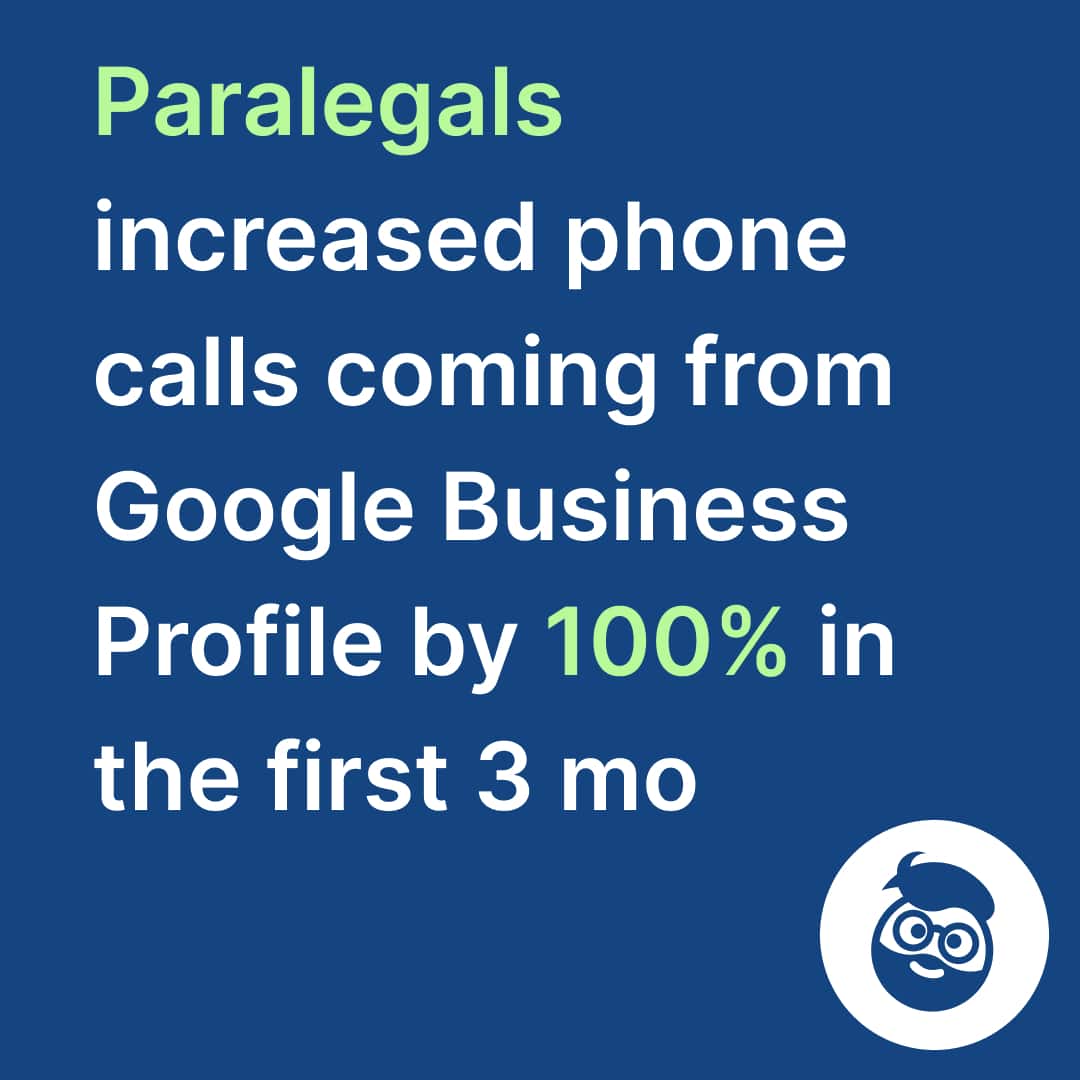
Local service provider invisible in Google Local Pack results A plumbing company operating across three cities generated zero Local Pack appearances despite having a verified Google Business Profile, because its profile had incomplete service area configuration, its website had no location-specific landing pages targeting city-level keywords, and its NAP (name, address, phone) data was inconsistent across 14 local directory citations. SEOBRO.Agency corrected NAP consistency across all citation sources, built three city-specific landing pages targeting transactional local queries (“emergency plumber [city]”, “[city] boiler repair”) with LocalBusiness schema markup, and optimized the Google Business Profile with service-specific categories and geo-tagged photo uploads. Local Pack appearances for target city keywords increased from zero to consistent page 1 placement within 8 weeks, producing a 67% increase in phone call conversions tracked through Google Business Profile.

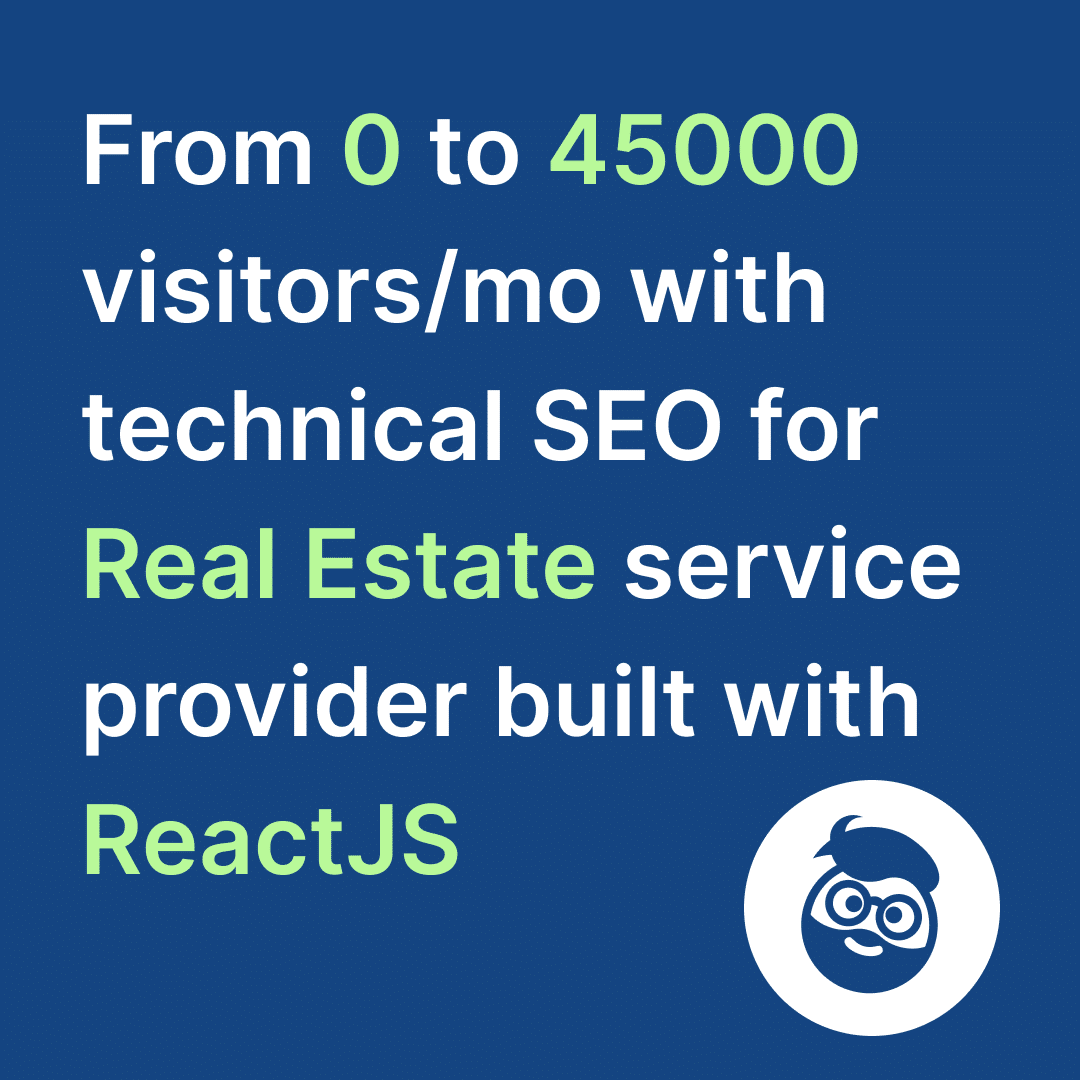
B2B SaaS company with JavaScript rendering blocking indexation A B2B SaaS company built its product and feature pages entirely in client-side JavaScript, meaning Googlebot’s first crawl pass — which does not execute JavaScript — returned blank pages with no indexable content. Feature pages targeting high-intent queries like “project management software for construction teams” were ranking on page 4–5 despite strong backlink profiles, because Google was indexing empty page shells rather than the actual content. SEOBRO.Agency implemented server-side rendering for all priority commercial pages, ensuring Googlebot received fully rendered HTML on first crawl. Within three crawl cycles — approximately 6 weeks — indexed content on affected pages increased from 0 to full page content, and target keyword rankings moved from positions 35–50 to positions 8–15, with three priority keywords reaching page 1 within 90 days of implementation.

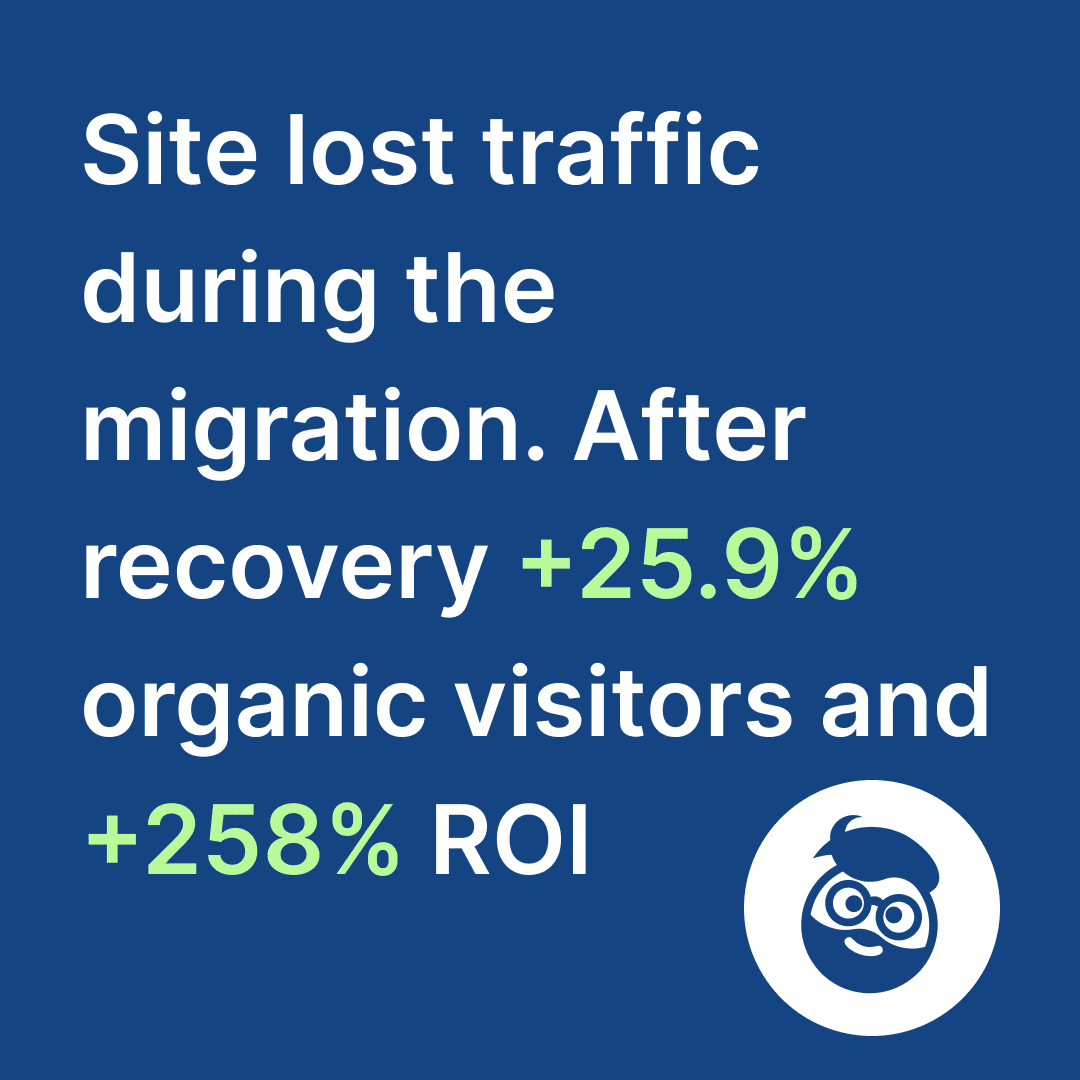
Enterprise site migration with 35% organic traffic loss A multinational corporation migrating from an legacy CMS to a new platform lost 35% of organic traffic within 30 days of launch — caused by 4,200 broken redirects mapping old URLs to incorrect destination pages, hreflang tags pointing to non-existent URL variants in six international markets, and canonical tags on the new platform defaulting to the homepage rather than the correct page URL. SEOBRO.Agency conducted a post-migration technical audit within 48 hours of identifying the traffic drop, rebuilt the redirect mapping table to correct all 4,200 broken redirects, fixed hreflang implementation across all six international variants, and corrected canonical tag configuration site-wide. Organic traffic recovered to pre-migration levels within 11 weeks, with international market visibility fully restored within three Google crawl cycles.

We are looking forward to working with you

    Do you have any current issues with your website? (optional)

    Additional notes*

    All fields marked with * are mandatory